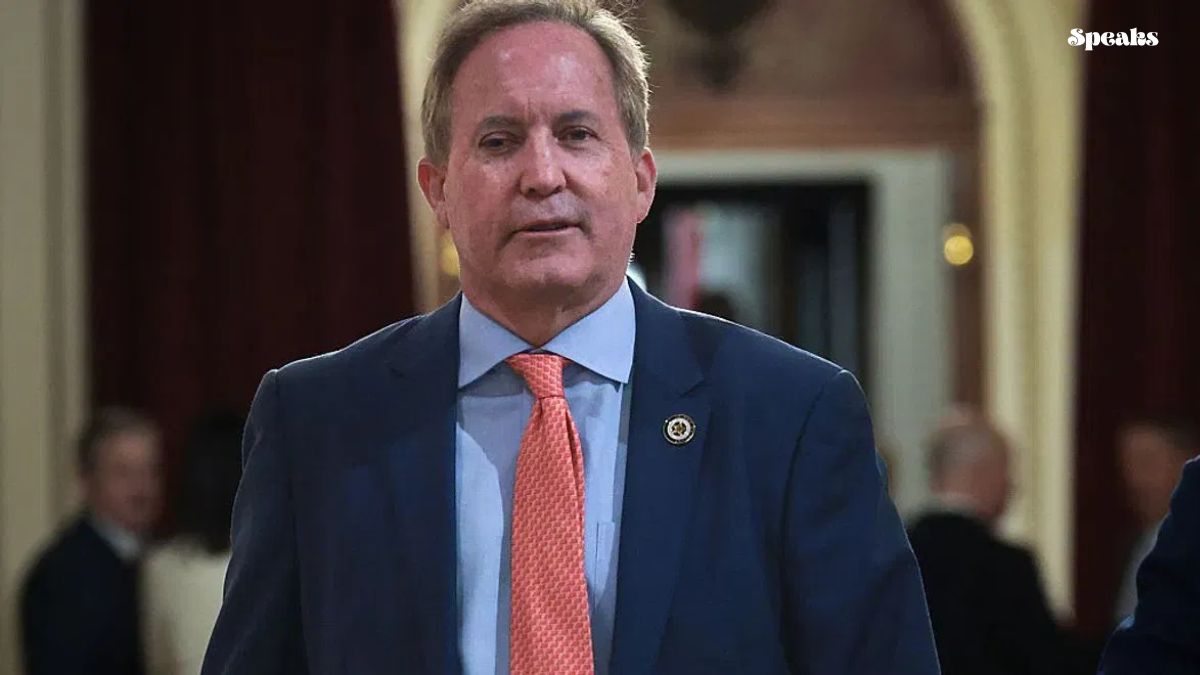
Texas Attorney General Ken Paxton is abandoning several high-profile lawsuits against immigrant advocacy organizations, a Muslim civil rights group and the NCAA as he prepares to leave office following his failed U.S. Senate campaign.
The decisions mark a significant shift in a series of legal battles that attracted national attention and drew criticism from civil rights organizations. Several of the targeted groups had accused Paxton’s office of using state litigation to pressure organizations over their political activities and public positions.
Among the cases being dropped are lawsuits involving Annunciation House, a migrant shelter network in El Paso, Houston-based immigrant rights group FIEL, the Council on American-Islamic Relations (CAIR) and the National Collegiate Athletic Association (NCAA).
The dismissals followed the November 3, 2026, election, in which Paxton lost his bid for the U.S. Senate. Democrat James Talarico defeated him in the race, while Democrat Nathan Johnson won the election to become Texas’ next attorney general.
Why Ken Paxton Is Dropping the Lawsuits
The withdrawals come after years of legal disputes involving organizations that had challenged Texas immigration policies, advocated for Muslim communities or criticized positions supported by Republican leaders.
Paxton’s office did not provide detailed explanations for several of the dismissals. Court filings generally recorded the state’s decision to stop pursuing the cases without outlining why the attorney general had changed course.
The timing has attracted attention because the decisions came shortly after the election and before a new administration takes control of the Texas attorney general’s office.
Johnson has said he intends to review cases initiated under Paxton and reconsider litigation he views as politically motivated. The incoming attorney general’s position has added another layer of significance to the outgoing administration’s decisions.
However, the available court filings do not establish that Paxton withdrew the lawsuits for a single political reason. His office had not publicly explained the broader strategy behind the withdrawals.
Annunciation House Lawsuit Ends After Years of Legal Disputes
One of the most closely watched cases involved Annunciation House, a nonprofit network operating migrant shelters in El Paso.
Paxton had accused the organization of illegally harboring undocumented immigrants and sought to shut down its operations. The lawsuit became a major point of conflict between the state and an organization providing assistance to migrants near the U.S.-Mexico border.
Annunciation House denied wrongdoing and challenged the state’s efforts in court. Its work included providing temporary shelter and assistance to migrants who had been processed and released by federal immigration authorities.
The attorney general’s office eventually abandoned its effort to close the organization. Ruben Garcia, Annunciation House’s founder and executive director, welcomed the decision after the lengthy legal fight.
The dismissal brought an end to a dispute that had consumed significant time and resources for the nonprofit.
Ken Paxton Drops Lawsuit Against Houston Immigration Group FIEL
Paxton’s office also withdrew its lawsuit against Familias Inmigrantes y Estudiantes en la Lucha, commonly known as FIEL.
The Houston-based organization works with immigrant families and students. The state had accused the nonprofit of violating restrictions governing its charitable status through social media activity opposing immigration policies supported by President Donald Trump and Texas Gov. Greg Abbott.
The lawsuit followed the group’s criticism of Texas Senate Bill 4, a state law that sought to give Texas authorities broader powers to arrest people suspected of entering the country illegally.
FIEL’s executive director, Cesar Espinosa, said the litigation had placed a substantial burden on the organization. He said the group could now return its attention and resources to protecting and supporting immigrant communities.
The state withdrew its claims with prejudice, meaning it cannot bring the same claims against FIEL again.
The decision was particularly significant for the nonprofit because the lawsuit had affected its ability to focus on its regular programs and community work.
CAIR Lawsuit Dropped After Attempt to Restrict Muslim Civil Rights Group
Another major development involved the Council on American-Islamic Relations, one of the largest Muslim civil rights organizations in the United States.
Paxton’s office had filed a lawsuit seeking to prevent CAIR from operating in Texas. The state also asked a judge to designate the organization as a foreign terrorist and transnational criminal organization.
The lawsuit, filed in February 2026, alleged connections involving the Muslim Brotherhood. CAIR rejected the allegations and challenged the state’s legal action.
The case attracted national attention because of the potential consequences for the organization’s activities and its ability to serve Muslim communities.
Paxton’s office filed a notice ending the lawsuit on November 16. CAIR welcomed the withdrawal, while its representatives criticized the decision to pursue the case in the first place.
The dismissal represented another retreat from a high-profile legal campaign launched by the Texas attorney general.
NCAA Lawsuit Over Transgender Athletes Also Abandoned
The NCAA was another major target of Paxton’s legal campaign.
In December 2024, his office sued the college sports organization, accusing it of misleading consumers by marketing competitions as women’s sports while allowing transgender athletes to participate under its policies.
The lawsuit was brought under the Texas Deceptive Trade Practices Act. Paxton argued that the NCAA’s descriptions of women’s competitions could mislead sports fans and consumers.
The NCAA disputed the allegations and maintained that its policies were clear regarding participation in women’s college sports.
In November 2026, Paxton’s office informed a Texas district court that it would no longer pursue the case.
The NCAA welcomed the decision, saying its policies already established who could compete in women’s college sports. The dismissal ended a legal dispute that had placed transgender participation in athletics at the center of another major Texas political controversy.
What Happens to the Other Cases Filed by Paxton?
The recent withdrawals do not mean that every controversial lawsuit initiated by Paxton has been abandoned.
His office has continued pursuing other legal matters, including a long-running Medicaid fraud lawsuit involving Planned Parenthood. That case remains separate from the dismissals involving immigrant organizations, CAIR and the NCAA.
Paxton also withdrew his support from an appeal involving Houston doctor Mary Talley Bowden and the Texas Medical Board. Bowden had been reprimanded after prescribing ivermectin to a COVID-19 patient at a hospital where she did not have practice privileges.
These developments show that the outgoing attorney general’s office has been reviewing or changing its position across several different legal disputes.
The cases also differ in their procedural status. Some withdrawals prevent the state from bringing the same claims again, while other dismissals may leave different legal options available.
Texas Politics Faces a Legal Shift After the 2026 Election
The changes come during a transition in Texas political leadership. Paxton’s defeat in the Senate race and Johnson’s victory in the attorney general election have raised questions about which legal priorities will continue under the next administration.
Johnson has indicated that he wants to examine lawsuits pursued by the current attorney general and reconsider cases that he believes were driven by political considerations.
That review could affect how Texas uses its legal authority in disputes involving immigration, civil rights organizations, education and public policy.
For the organizations involved, the dismissals offer relief from litigation that several leaders said had consumed money, staff time and organizational resources.
The broader political and legal implications will become clearer as the outgoing administration completes its remaining work and the incoming attorney general prepares to take office.