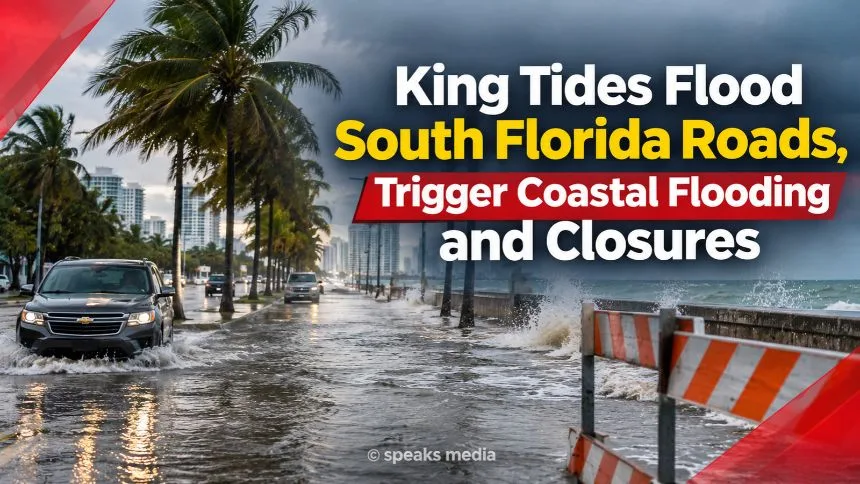
South Florida faced major coastal flooding on Tuesday, October 27, as seasonal king tides combined with strong winds and periods of heavy rain to push water onto streets and disrupt travel. Fort Lauderdale and Miami experienced water levels above normal high tide, reaching major flood levels under National Weather Service criteria.
The flooding prompted road closures in affected areas as a coastal flood warning remained in effect. Low-lying coastal neighborhoods and roadways were particularly vulnerable as high water spread across parts of the region.
King Tides Flooding Hits Fort Lauderdale and Miami
The latest king tides flooding affected communities across South Florida, where unusually high tides pushed water onto coastal roads. Video footage from Las Olas Boulevard in Fort Lauderdale, recorded on October 27, showed flooding during the high-tide event.
Strong winds and periods of heavy rain added to the threat, making travel more difficult for residents. Flooded streets created hazardous driving conditions, while local authorities faced the challenge of managing affected roads as water levels rose.
The timing of the tides also mattered. Coastal flooding can become more severe when strong onshore winds push seawater toward land, particularly when rainwater has limited space to drain.
Why King Tides Cause Coastal Flooding
King tides are exceptionally high seasonal tides that occur when astronomical conditions bring water levels to their highest points during the tidal cycle. They are not caused by a storm, although weather conditions can make their impacts more severe.
South Florida is especially vulnerable because of its low elevation, extensive canal network and proximity to the Atlantic Ocean. High water levels can push seawater into drainage systems and onto streets, particularly in neighborhoods with a history of tidal flooding.
Heavy rainfall can compound the problem by adding more water to areas where drainage is already restricted. Strong winds can also increase coastal water levels and produce rough surf, creating additional hazards along the shoreline.
Road Closures and Travel Disruptions Across South Florida
Flooded roads can make everyday travel dangerous, particularly in low-lying neighborhoods near waterways. Drivers may encounter standing saltwater that hides road hazards, while passing vehicles can push water onto nearby properties.
Fort Lauderdale officials have warned residents that streets in flood-prone areas can become impassable around peak high tide. Temporary road closures may be necessary to protect motorists and allow conditions to improve.
Residents are advised to follow local traffic updates, obey closure signs and avoid driving or walking through floodwater. Saltwater can also corrode vehicles and damage electrical and mechanical components.
King Tides Flooding Risk Continues Through October
South Florida’s seasonal king tide period extends beyond a single day. Fort Lauderdale lists October 24–31 among its predicted king tide dates for 2026, with additional high-tide periods expected in November and December.
The actual severity of flooding depends on several factors, including tide levels, rainfall, wind direction and local drainage conditions. Even when tides are forecast in advance, water levels and their effects can vary between neighborhoods.
Residents in vulnerable areas should monitor local weather alerts, move vehicles away from flood-prone streets and secure belongings that could be damaged by rising water. Officials also recommend checking road conditions before traveling during high-tide periods.