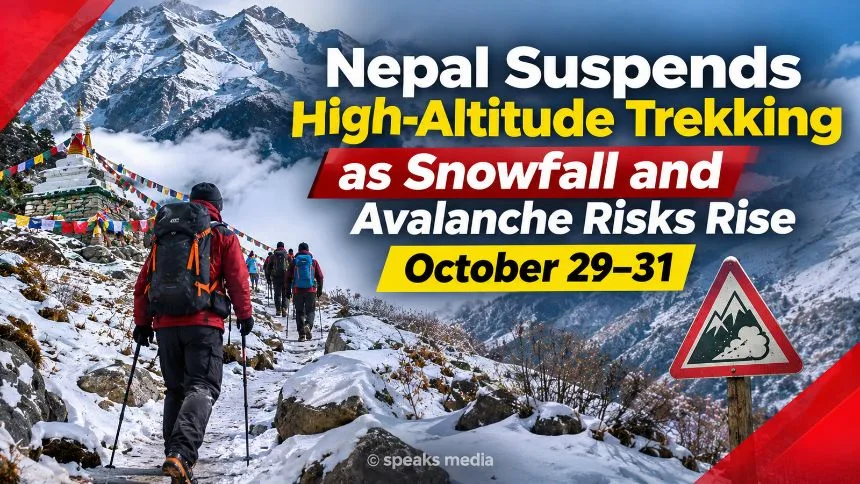
KATHMANDU, October 28, 2026 — Nepal has urged trekkers to avoid high-altitude Himalayan routes from October 29 to 31 as forecasts of heavy snowfall, snowstorms and avalanches raise safety concerns across mountainous areas.
The Department of Immigration has announced a temporary suspension of trekking permits for restricted areas during the three-day period. Trekkers already in affected regions have been advised to move to safe locations and avoid continuing their journeys while hazardous conditions persist.
The warning follows an advisory from Nepal’s National Disaster Risk Reduction and Management Authority, which has cautioned that deteriorating weather could put tourists, guides and other mountain travelers at risk.
Snowfall Warning Prompts Nepal Trekking Restrictions
Authorities have asked trekking agencies, tour operators, guides and visitors to follow the safety advisory. The restrictions are intended to reduce exposure to dangerous weather in high-altitude and restricted Himalayan areas.
The Department of Immigration announced that permits for the affected restricted areas would not be issued for the specified period. Travelers who have already entered these regions have been urged to remain in secure locations rather than attempt exposed mountain routes.
Heavy snowfall can quickly cover trails, reduce visibility and make steep paths slippery. Snowstorms and avalanches create additional hazards, particularly on remote routes where reaching emergency assistance can take considerable time.
Cyclone Arnab Raises Concerns Over Himalayan Weather
The approaching weather system known as Cyclone Arnab is expected to affect parts of Nepal from the night of October 29, bringing the possibility of heavy rainfall, thunderstorms, lightning and strong winds. Mountain areas face additional risks from snowstorms and avalanches.
Gandaki Province is among the areas expected to face adverse weather. Authorities have urged trekking agencies to reconsider high-altitude trips and take precautions on routes vulnerable to landslides, damaged trails and disrupted transport.
In Mustang, local officials have separately warned tourists against high-altitude travel during the October 29–31 period. Travelers heading toward the Korala border area have also been advised to postpone journeys if snowfall makes roads unsafe.
What Trekkers in Nepal Should Know
International visitors planning Himalayan treks should contact their trekking agency before departure and confirm whether their route remains accessible. Travelers already in the mountains should follow instructions from local authorities and guides.
Trekkers should avoid crossing exposed passes, walking onto unstable snow-covered slopes or continuing into areas affected by severe weather. Heavy snow can obstruct trails, while avalanches may occur without much warning when snow conditions change.
Authorities have asked tourism businesses and guides to prioritize visitor safety and comply with the temporary restrictions. Travelers should monitor official weather bulletins and wait for updated guidance before resuming journeys into affected high-altitude areas.