
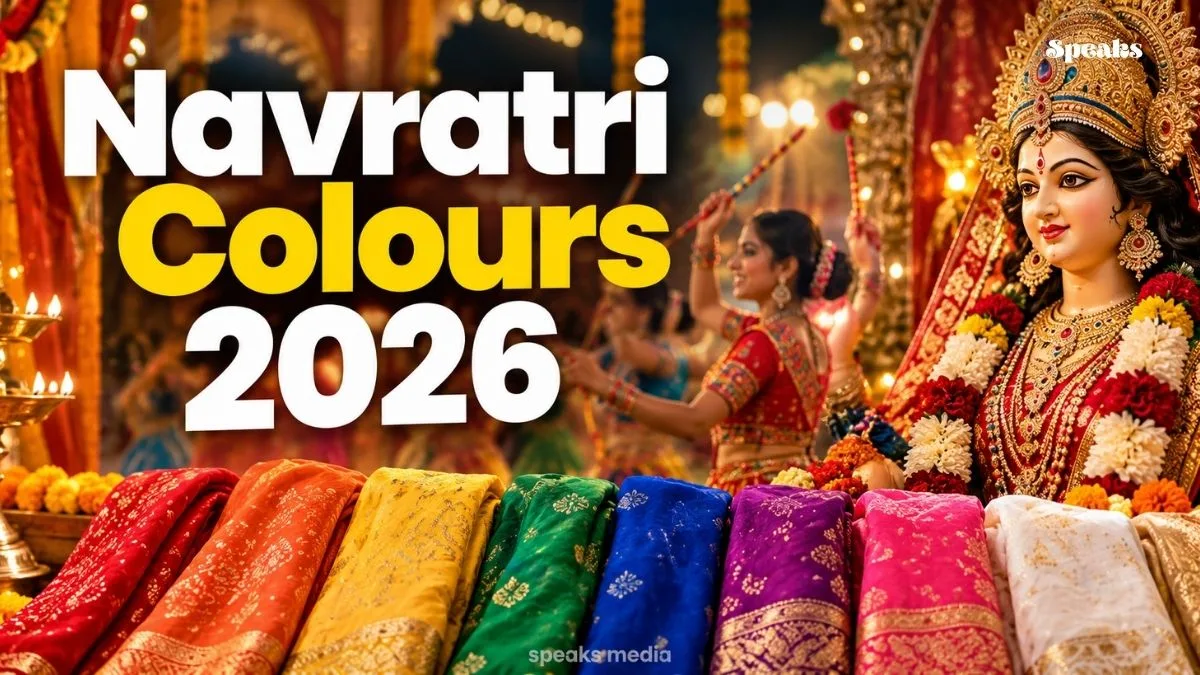
Navratri Colours 2026: Shardiya Navratri will begin on Sunday, October 11, and continue until October 19, 2026. During these nine days, devotees worship the nine forms of Goddess Durga and traditionally choose a different colour for each day.
The colours are closely associated with the festive spirit of Navratri. Many devotees wear the day’s colour while visiting temples, attending Garba and Dandiya events or performing prayers at home.
If you are planning your outfits for Navratri 2026, here is the complete Navratri colours list with date, along with the Goddess worshipped on each day.
Navratri Colours 2026: Full List With Dates
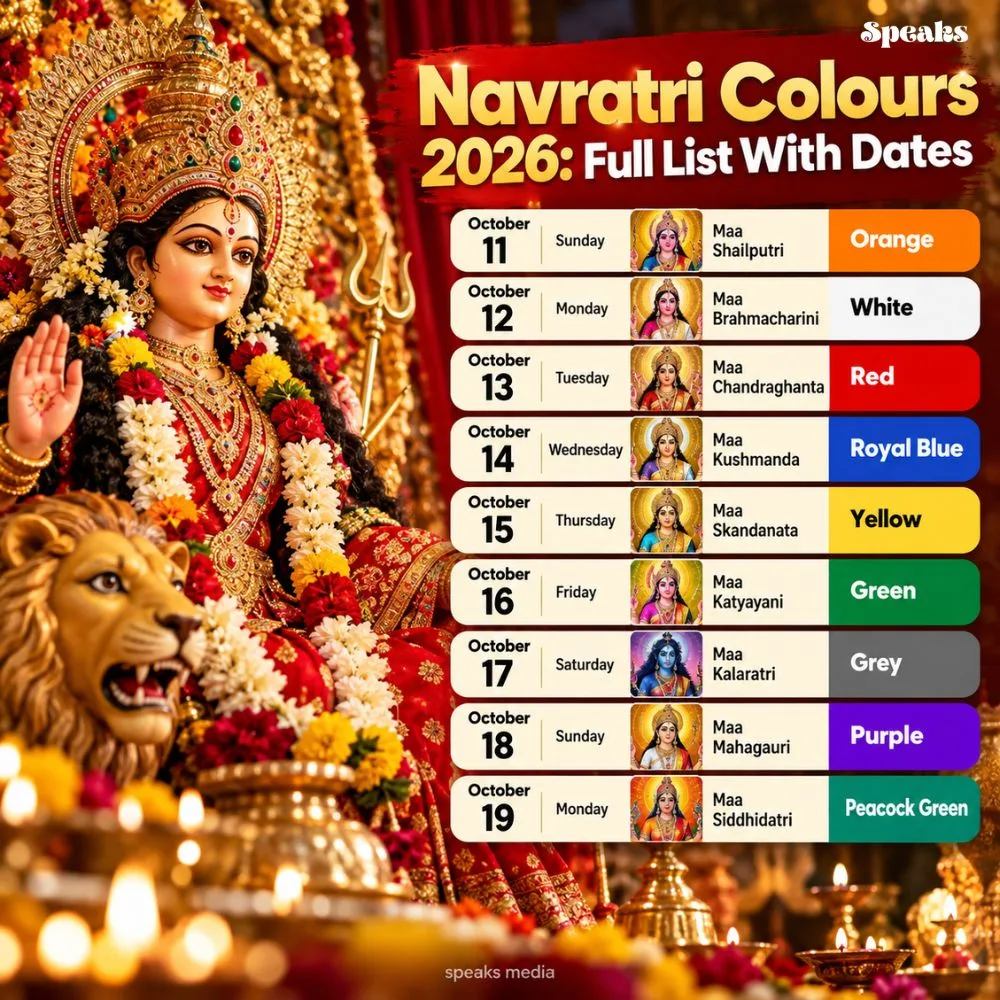
| Date | Day | Goddess Worshipped | Navratri Colour 2026 |
|---|---|---|---|
| October 11 | Sunday | Maa Shailputri | Orange |
| October 12 | Monday | Maa Brahmacharini | White |
| October 13 | Tuesday | Maa Chandraghanta | Red |
| October 14 | Wednesday | Maa Kushmanda | Royal Blue |
| October 15 | Thursday | Maa Skandamata | Yellow |
| October 16 | Friday | Maa Katyayani | Green |
| October 17 | Saturday | Maa Kalaratri | Grey |
| October 18 | Sunday | Maa Mahagauri | Purple |
| October 19 | Monday | Maa Siddhidatri | Peacock Green |
The above sequence follows the widely followed day-wise colour tradition reported for Shardiya Navratri 2026.
October 11 – Orange: Maa Shailputri
Navratri begins with the worship of Maa Shailputri. Orange is traditionally associated with the first day and represents enthusiasm, energy and a positive beginning.
An orange saree, kurta, suit or even a dupatta can be used to follow the festive colour theme.
October 12 – White: Maa Brahmacharini
The second day is dedicated to Maa Brahmacharini, with white traditionally chosen as the colour of the day.
White is commonly associated with peace, purity and simplicity. It also gives the celebrations a calm and traditional feel.
October 13 – Red: Maa Chandraghanta
Red is the colour for the third day, dedicated to Maa Chandraghanta. The colour is traditionally linked with strength, courage, energy and devotion.
Red sarees, kurtas, suits and other traditional outfits are popular choices for this day.
October 14 – Royal Blue: Maa Kushmanda
The fourth day is dedicated to Maa Kushmanda, and the colour is royal blue.
The shade is associated with confidence, dignity and stability. It also adds a distinctive festive look to traditional outfits.
October 15 – Yellow: Maa Skandamata
Yellow is associated with the fifth day and the worship of Maa Skandamata.
The colour is traditionally linked with happiness, positivity and prosperity. Yellow ethnic wear is a popular choice for devotees during the celebrations.
October 16 – Green: Maa Katyayani
The sixth day is dedicated to Maa Katyayani, with green as the traditional colour.
Green is associated with nature, growth and renewal. It is also one of the most popular festive colours during Navratri celebrations.
October 17 – Grey: Maa Kalaratri
Grey is traditionally associated with the seventh day and Maa Kalaratri.
The colour is often linked with balance, stability and composure. Devotees who prefer subtle festive colours can opt for grey ethnic wear on this day.
October 18 – Purple: Maa Mahagauri
The eighth day is associated with Maa Mahagauri and the colour purple.
Purple is traditionally connected with spirituality, dignity and a sense of grandeur. It can also add a rich festive touch to Navratri attire.
October 19 – Peacock Green: Maa Siddhidatri
Peacock green marks the ninth day of Navratri and is associated with Maa Siddhidatri.
The shade combines elements of green and blue and is traditionally linked with freshness, beauty and positivity.
Why Are Navratri Colours Important?
The tradition of wearing specific colours during Navratri is followed by many devotees, particularly in Maharashtra and other parts of India.
Each colour carries a symbolic meaning in popular religious and cultural traditions. However, these meanings are devotional and symbolic rather than a guarantee that wearing a particular colour will produce a specific result.
Navratri 2026 Dates
There is an important calendar detail to remember during Navratri 2026. According to the cited festival schedules, Saptami extends across October 17 and October 18, while Durga Ashtami and Mahanavami fall on October 19.
Navratri concludes on October 19, followed by Vijayadashami or Dussehra on October 20, 2026.
This makes the date-wise calendar particularly useful for devotees planning puja, fasting, Kanya Puja, Garba events and traditional outfits.
Navratri Colours 2026
From October 11 to October 19, the traditional colour sequence is Orange, White, Red, Royal Blue, Yellow, Green, Grey, Purple and Peacock Green.
Devotees can follow the colour tradition according to their family customs and local religious practices. The most important part of Navratri remains devotion, prayer and participation in the festival with faith.


