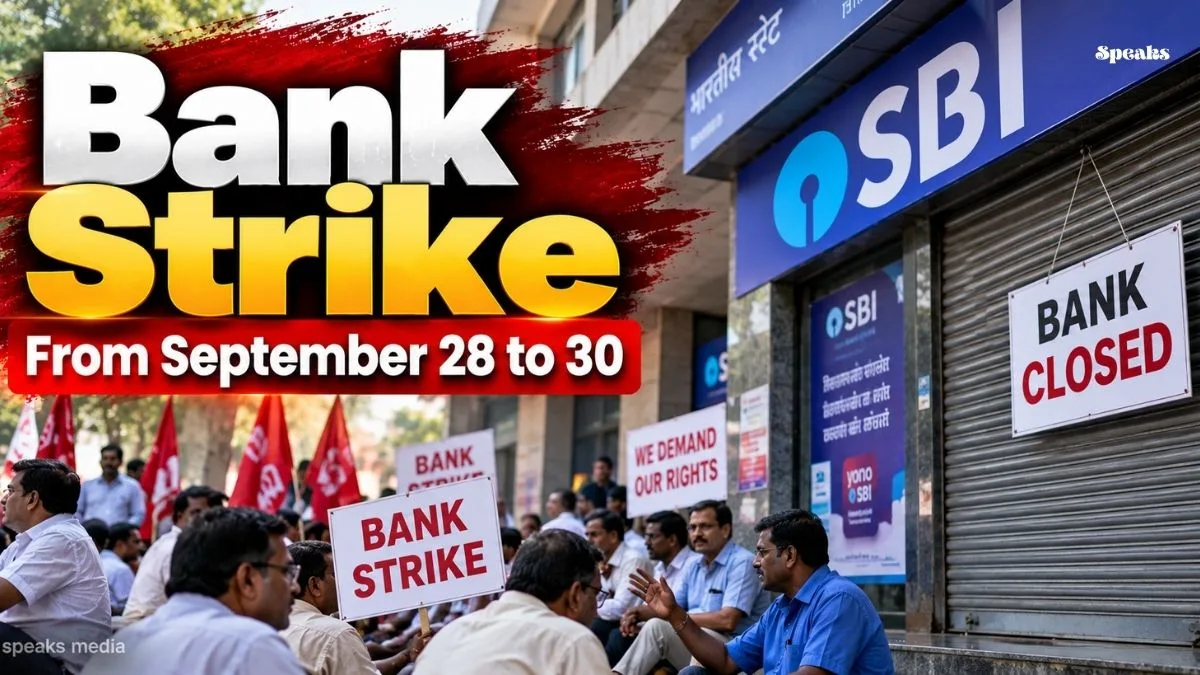
Bank customers across India may face disruption in branch-based services from September 28 to September 30, 2026, as bank unions have called a three-day nationwide strike. The action has been organised under the United Forum of Bank Unions (UFBU), with the main demand being the implementation of a five-day banking week.
The timing of the strike could make the disruption feel longer for customers. September 26 and 27 fall on the weekend, while the strike is scheduled for the following three days. Public sector banks and regional rural banks were therefore asked to remain open on Sunday, September 27, giving customers an additional opportunity to complete important branch-related work before the strike.
The five-day work week is the central issue behind the latest protest. At present, bank branches generally remain closed on the second and fourth Saturdays of every month, while other Saturdays are working days. Bank unions are seeking a system in which all Saturdays are holidays, with working hours adjusted during weekdays.
The unions have also raised concerns over the Performance Linked Incentive (PLI) system and other employee-related matters. The government has said that the PLI scheme has been kept in abeyance, while discussions on the five-day banking proposal have continued. Despite several rounds of talks, the issue has not yet been resolved.
Customers should expect the biggest impact at physical bank branches during the strike period. Cash deposits and withdrawals, cheque-related work, account services and other transactions that require branch staff could be delayed. Public sector banks are expected to be more affected, while the impact on private-sector banks is expected to be comparatively limited.
Digital banking services are expected to continue during the strike. Customers can use UPI, mobile banking, internet banking and ATMs for many routine transactions. However, services that depend on branch employees or physical processing may not be completed immediately, so customers with urgent banking requirements have been advised to plan ahead.
The strike also comes at an important time for banks because September 30 marks the half-yearly closing. Banks have to complete activities such as reconciliation, provisioning and treasury-related work around this date. The government has therefore asked banks to make arrangements to minimise disruption and maintain essential services, including adequate cash availability at ATMs.
The government has appealed to bank employees and unions to continue discussions rather than proceed with the strike. According to the Finance Ministry, several rounds of dialogue and conciliation have already taken place. The government has said the five-day banking proposal remains under consideration, but no specific implementation timeline has been announced.
The September 28-30 action follows a one-day nationwide bank strike held on September 11. UFBU has also proposed an indefinite strike from October 26 if the five-day banking demand remains unresolved. Whether that further action takes place will depend on developments in negotiations between the unions, banks and the government.
For customers, the safest approach is to complete urgent branch-dependent transactions before the strike and use digital channels wherever possible during the affected days. Customers should also check their individual bank’s official communication because the impact can vary depending on the bank and the type of service required.